
Berberine: What the Research Says About a Powerful Plant Compound

Nooshin K. Darvish, ND, ABAAHP
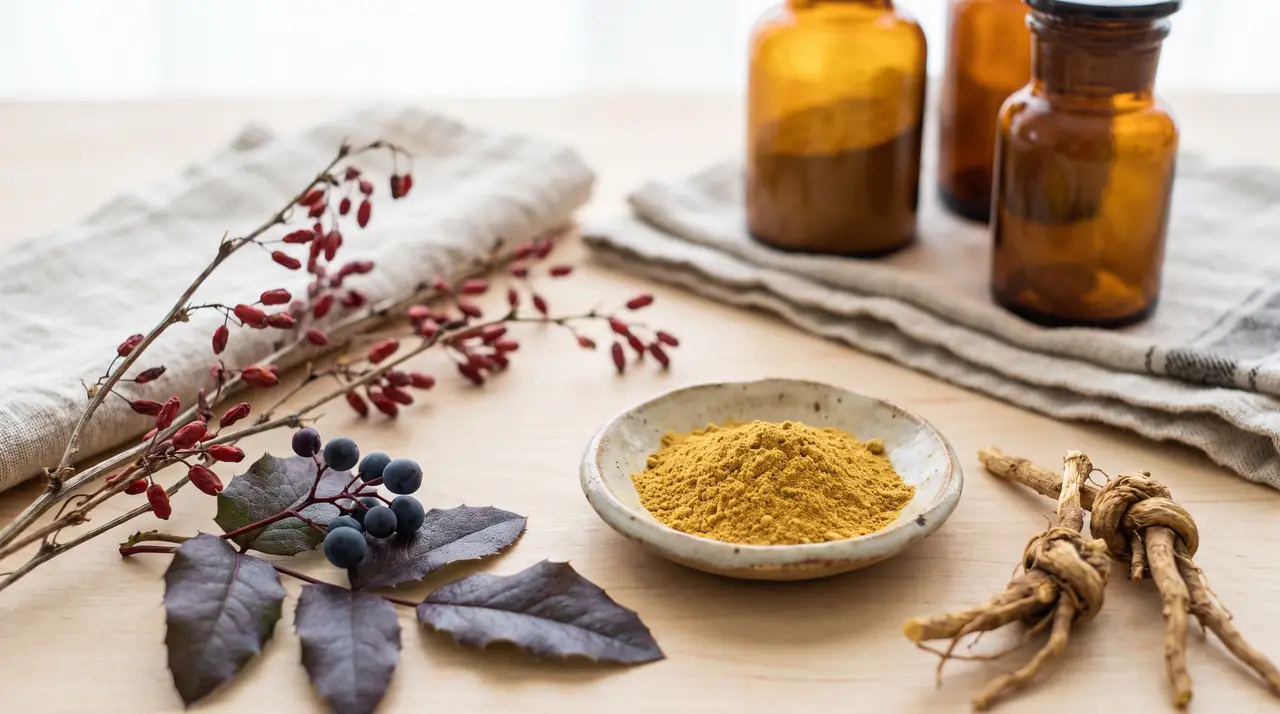
Berberine is a plant compound that has drawn growing scientific interest for the many ways it interacts with the body. Researchers are studying how it influences gene expression, inflammation, and metabolic processes, and what that may mean for supporting long-term health.
Berberine is an alkaloid found naturally in the roots of certain plants, including European barberry, goldenseal, goldthread, and Oregon grape. As a bitter that interacts with the gut microbiome, it may help support healthy immune and digestive function.
Much of the recent research explores berberine’s role in supporting healthy blood sugar and insulin sensitivity, cholesterol and blood pressure already within a normal range, healthy body weight, and cognitive and metabolic wellness. Some studies have compared it with conventional medications; these findings are still emerging, and berberine is not a replacement for any prescribed treatment.
Berberine’s effects on cell metabolism and growth pathways are also an active area of laboratory research. This work is early and does not establish berberine as a treatment or preventive for any cancer; we share it here as background, not medical advice.
The research on berberine is still in its early stages, but its effects on gene and genetic expression make it a compound worth watching. Your physician can help you understand whether berberine fits into your individual wellness plan.
Berberine is not necessarily for everyone as some adverse effects are possible. Berberine may cause nausea, diarrhea, and too low of a blood sugar in some people.
“The skillful physician does not give the same medicine to cure each disease and each malady, but he changes remedies and medicines according to the different necessities of the diseases and constitutions.”
(‘Abdu’l-Bahá. Some Answered Questions, p 108)
Please consult your Holistique physician to see if berberine is the powerful medicine for you. Each person is unique and each requires a unique and individualized treatment. Call Holistique (425) 451-0404 for a consultation.
References:
- Tatyasaheb Patil1 et al. Review Article *Author for Correspondence Is Berberine Superior to Metformin in Management of Diabetes Mellitus and its Complications? www.ijppr.com International Journal of Pharmacognosy and Phytochemical Research 2015; 7(3); 543-553 ISSN: 0975-4873
Hong M1, Tan HY2, Li S3, Cheung F4, Wang N5, Nagamatsu T6, Feng Y. Cancer Stem Cells: The Potential Targets of Chinese Medicines and Their Active Compounds.Int J Mol Sci. 2016 Jun 7;17(6). pii: E893. doi: 10.3390/ijms17060893.
Jiarong Lana, b, 1,Journal of Ethnopharmacology. Meta-analysis of the effect and safety of berberine in the treatment of type 2 diabetes mellitus, hyperlipemia and hypertension Volume 161, 23 February 2015, Pages 69–81 http://dx.doi.org/10.1016/j.jep.2014.09.049
- Kazunori Fukuda. Inhibition by berberine of cyclooxygenase-2 transcriptional activity in human colon cancer cell. Journal of Ethnopharmacology Volume 66, Issue 2, August 1999, Pages 227–233 http://dx.doi.org/10.1016/S0378-8741(98)00162-7
Liu Q1, Xu X1, Zhao M1, Wei Z1, Li X1, Zhang X1, Liu Z1, Gong Y1, Shao C2. Berberine induces senescence of human glioblastoma cells by downregulating the EGFR-MEK-ERK signaling pathway. Mol Cancer Ther. 2015 Feb;14(2):355-63. doi: 10.1158/1535-7163.MCT-14-0634. Epub 2014 Dec 12.
- Zhiyou Ca et al. Role of berberine in Alzheimer’s disease. Neuropsychiatr Dis Treat. 2016; 12: 2509-2520.doi: 10.2147/NDT.S114846 PMCID: PMC5055107
Xin-xia Chang et al. The effects of berberine on hyperhomocysteinemia and hyperlipidemia in rats fed with a long-term high-fat diet. Lipids in Health and Disease 201211:86 DOI: 10.1186/1476-511X-11-86 © Chang et al.; licensee BioMed Central Ltd. 2012. https://lipidworld.biomedcentral.com/articles/10.1186/1476-511X-11-86
Junwen Chen et al. Berberine derivatives reduce atherosclerotic plaque size and vulnerability in apoE−/− mice. Journal of Translational Medicine 2014 12:326 DOI: 10.1186/s12967-014-0326-7 https://translational-medicine.biomedcentral.com/articles/10.1186/s12967-014-0326-7
You may also enjoy
 Hormone & Metabolic Health
Oct 13, 2026
HRT Not Working? How Senescent Cells and TPE Explain Ongoing Symptoms
You started hormone therapy expecting to feel like yourself again. Your labs may even look good now. But the fatigue, brain fog, or joint pain never fully lifted. If this sounds familiar, the missing piece may not be your hormone levels at all. It may be cellular senescence.
 Detoxification
Oct 6, 2026
Why Detoxification Is the Missing Piece in Hormone Balance
When women come to see me struggling with perimenopause, the conversation almost always starts with hormones. But after three decades of practice, I have learned that hormone therapy alone is rarely the whole story. If detoxification pathways are overwhelmed, even well-dosed bioidentical hormones are fighting an uphill battle.
 Detoxification
Apr 22, 2026
Detoxification: What It Really Means (and How to Support It Naturally)
Detoxification: What It Really Means (and How to Support It Naturally) “Detox” is one of the most commonly used—and misunderstood—terms in health and wellness. Juice cleanses, teas, and quick-fix programs promise to “flush toxins,” but from a naturopathic and functional medicine perspective, detoxification is not something you turn on for a week—it’s something your body…